Tyre Pressure and Suspension Setup: Two Things That Affect Each Other
You've spent time getting SAG, preload, and clicks dialled in. Then you inflate the tyres "by eye" before heading off, and without realising it you've just changed the setup you'd only just finished sorting out.
Why they're connected
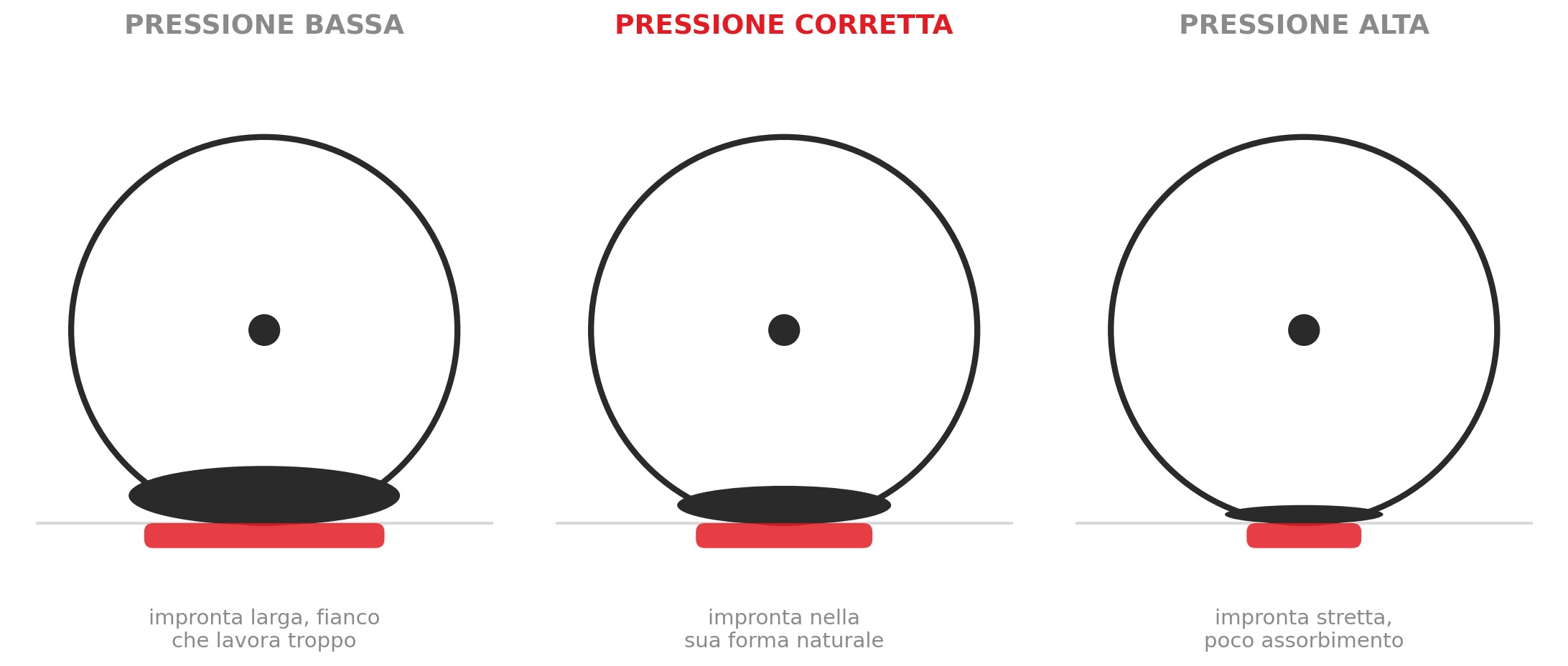
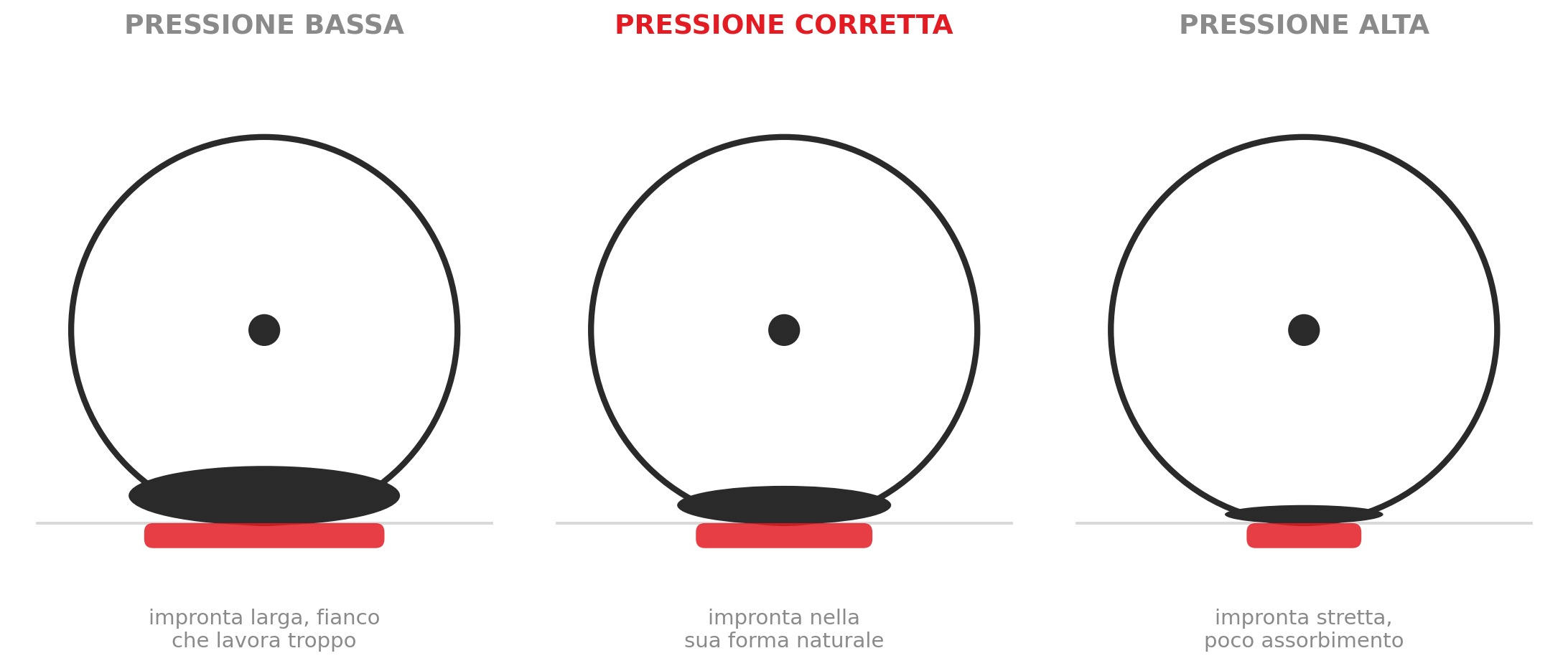
Suspension and tyre partly do the same job: absorbing what the road throws at them. The tyre is the first suspension component, the one still working even when the fork and shock have already done everything they can. Too much pressure stiffens that first suspension stage: the tyre absorbs less, and whatever it doesn't absorb gets passed straight to the actual suspension, which ends up dealing with sharper hits than your setup was calculated for.
Too little pressure does the opposite: the tyre deforms too much, the sidewall works harder than it should, and through corners the bike loses precision — a feeling of vagueness that often gets blamed on the suspension, when it actually originates in the tyre.

The most common mistake: "manual" pressure for every condition
The value listed by the manufacturer is a starting point calculated for average use, usually solo and without luggage. Ride two-up with panniers, and that figure is no longer the right one — and the same applies in reverse: solo, unloaded, on a mountain pass, a pressure slightly below the "book" value can actually give more grip and more feel, precisely because the tyre works better within its natural range of deformation.
When to check it
Check pressure cold, before setting off — it rises by a few tenths as it warms up on the move, and that's normal; don't chase it while you're riding. Checking it hot after an hour on the motorway and "correcting" it back down to the resting value is a mistake as common as it is pointless: you end up below the correct value the moment the tyre cools back down.
How this connects to everything else
If you've just redone the entire setup and the bike still feels "off" from what you expected, the first thing to check — before touching the clicks again — is tyre pressure. It costs two minutes and a gauge, against the hours already invested in suspension setup: checking it first is the cheapest way to rule out one variable before suspecting something more complicated.
Run the numbers on your own bike
ClickGarage.AI works these values out from your bike's data and your real weight. Go to the calculator